A strong kids program can be the most stable, profitable part of a BJJ academy. Parents pay reliably, families bring siblings, and a kid who starts at seven can be training with you for a decade. But kids' Jiu-Jitsu is its own discipline — different belt system, different class structure, and a whole layer of parent relationships to manage. Here's how to run one well.
The Kids Belt System Is Different
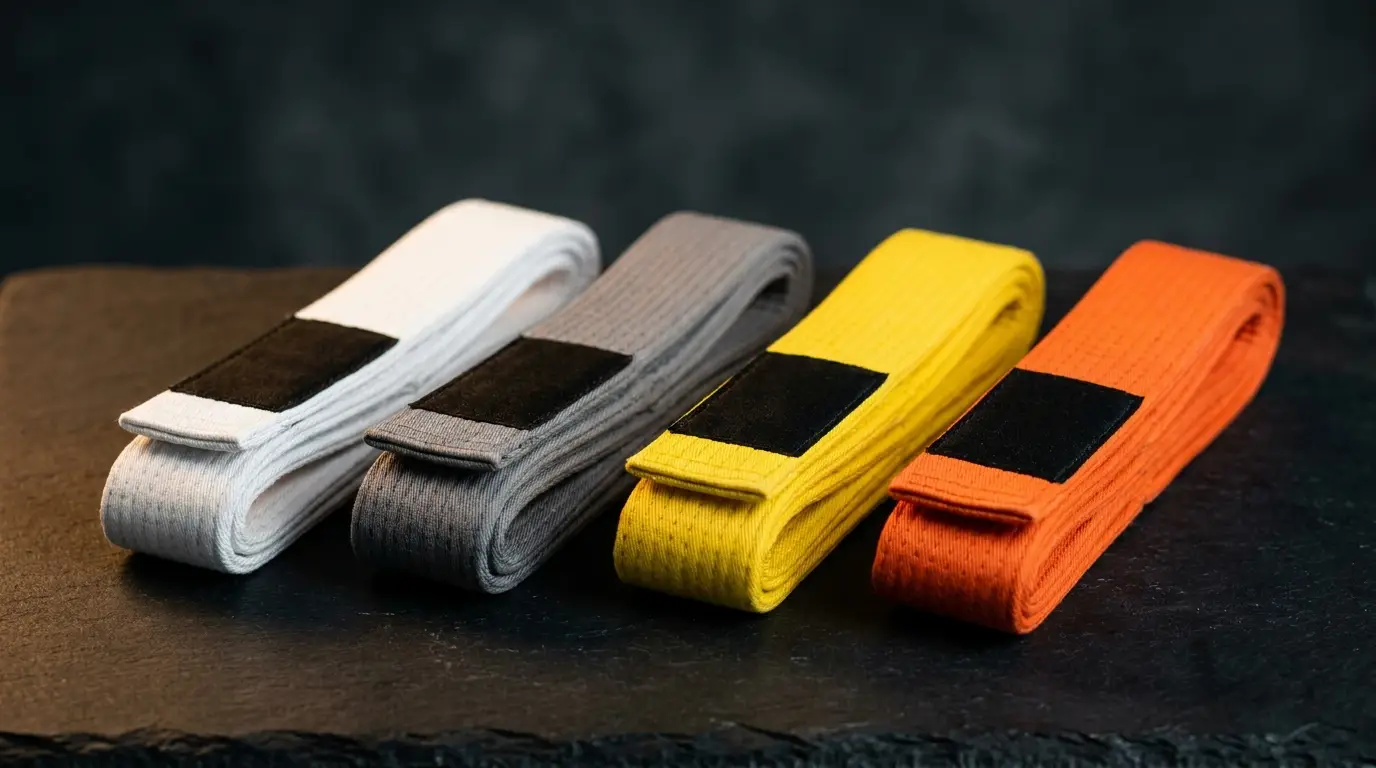
The IBJJF kids belt system runs from age 4 to 15 and has far more colours than the adult ladder, precisely because kids need more frequent milestones to stay motivated. The core progression of solid colours is:
- White → Grey → Yellow → Orange → Green, with white/coloured and coloured/black variants between the solids (e.g. grey-white, grey, grey-black).
- Each colour still carries up to four stripes, so kids feel forward motion within every belt — important when patience isn't a child's strong suit.
- At 16, students transition onto the adult belts (typically converting to blue or starting at white depending on age and level).
Structure Classes by Age, Not Just Belt
A five-year-old and a twelve-year-old need completely different classes. If your numbers allow, split the program by age band — the single biggest quality lever in kids' BJJ:
- Little Champs (≈4–6): movement, games, listening, basic body awareness. More play than technique. Short attention spans are the design constraint.
- Kids (≈7–10): real fundamentals introduced through games and drilling, with structure and a bit more discipline.
- Juniors / teens (≈11–15): closer to adult training — live rolling, deeper technique, competition prep for those who want it.
Coach Kids, Don't Just Teach Technique
Parents enrol kids in BJJ for confidence, discipline, focus, and anti-bullying skills at least as much as for armbars. The best kids coaches weave those into every class:
- Keep energy high and instructions short — games-based learning hides real technique inside fun.
- Reinforce behaviour: listening, respect, trying hard, helping smaller kids. Many gyms tie stripes partly to attitude and effort, not just technique.
- Talk explicitly about using Jiu-Jitsu only to protect themselves and others — the anti-bullying message parents care deeply about.
Parents Are Your Real Customers
The kid trains; the parent pays, drives, and decides whether to keep coming. A kids program lives or dies on the parent experience:
- Communicate constantly. Parents love knowing what their child is working on, when gradings are, and that their kid is progressing.
- Make logistics painless. Easy enrolment, clear schedules, simple billing, and family plans for multiple kids.
- Celebrate the milestones. A stripe day or a grading ceremony that parents are invited to watch is both great for the child and powerful word-of-mouth marketing.
- Run a real grading day. Kids and parents remember belt ceremonies forever — they're emotional high points that bond families to your gym.
Safety and Trust Are Non-Negotiable
Parents are trusting you with their children. Get the fundamentals visibly right: appropriate coach-to-kid ratios, working-with-children checks where required, signed waivers and medical info on file, and a calm, controlled mat. One safety lapse can end a kids program; consistent professionalism builds the trust that fills it.
Keep the Admin From Eating You Alive
A kids program multiplies the paperwork — more waivers, more belt records across a longer colour ladder, more family billing, more parent comms. Trying to run it on spreadsheets and memory is how details get dropped. The right system handles the kids belt colours, tracks each child's attendance and progression, manages family memberships, and keeps waivers and contact details in one place — so you can spend your time coaching, not chasing.
The Bottom Line
A great kids program rests on age-appropriate classes, frequent visible progression through the kids belt system, coaching that delivers the character skills parents value, a brilliant parent experience, uncompromising safety, and admin that doesn't bury you. Build that, and the kids program becomes the most loyal, lucrative, and rewarding part of your academy.